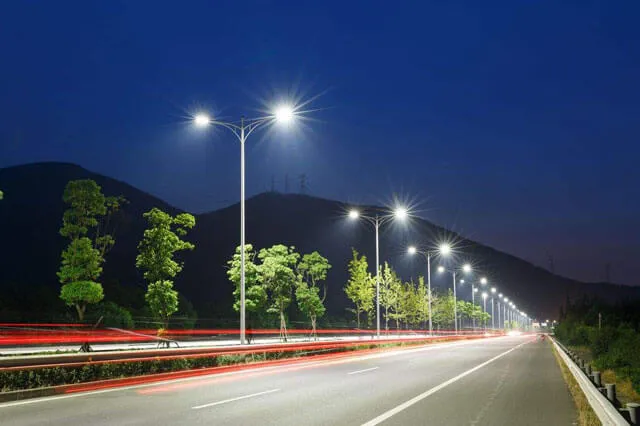
LED lighting is a heat problem wearing an electrical hat. Junction temperature drives light output, colour shift and lifetime, so a board that measures correctly on the bench can still fail in the field because the heat had nowhere to go. That is why the substrate and the thermal path are settled before the circuit is optimised.
Heat leaves through the board, not the air
Inside a sealed fixture there is very little convection. The heat path has to run from the LED pad through the dielectric into a metal base, and from there into the housing. Thermal vias, heavy copper planes and a metal backing are the three levers; a ceramic substrate is the option when the power density or the ambient temperature goes beyond what a metal-core laminate can hold. The published process limits are on the capability page, and they apply to every industry rather than to lighting alone.
Choosing the substrate
Aluminium base laminate is the working default for general lighting: it spreads heat well and keeps the cost of a large fixture reasonable. Copper base is chosen where conduction has to be better or where the mechanical design uses the board as a structural part. Ceramic covers the highest power densities, the widest temperature range and the designs where electrical isolation has to survive heat at the same time. The decision is made with engineering, on the thermal model, before the stack-up is frozen.
Assembly, coating and the fixture
LED boards usually carry parts that decide the assembly method: connectors that have to take a cable pull, optics that sit over the emitter, and driver sections that mix fine-pitch control with heavy copper. The board is assembled in house, then conformal coating, cable and harness work, firmware loading, functional and burn-in test and box build follow in the same plant, so a fixture can leave as one tested unit.
Records, confidentiality and visits
Fabrication and assembly share one plant, so one lot record covers the bare board, the material batch and the assembled fixture, and the inspection sequence behind it is on quality assurance. The certificate set — ISO 9001:2015, ISO 14001, ISO 45001 and UL file E354070 — is scanned on the certifications page.
Drawings can travel under a mutual NDA from the first exchange, and a visit to the Shenzhen or Meizhou plant can be arranged around the processes the fixture would use. Payment is by bank transfer (T/T), with goods quoted EXW Shenzhen or DDP.
Next step
Send the Gerber set, the thermal requirement, the BOM if assembly is included, the quantity and the target date. Board families used in lighting work have their own pages — aluminium and metal-core, heavy copper and ceramic — and box build covers the fixture. Lighting sections inside vehicle programmes are described under automotive and vehicle PCBs, the rest of the industries we serve are on the industries page, and a quote can be requested on the contact page.