Menu
Industries

Renewable Energy PCBs

An inverter, a charge controller and a storage system run high current and high voltage in the same enclosure, and then have to keep doing it for twenty years. Spacing, thermal paths and repeatability decide the board long before feature size does.

  • High current and spacing
  • Storage and inverters
  • Repeat orders

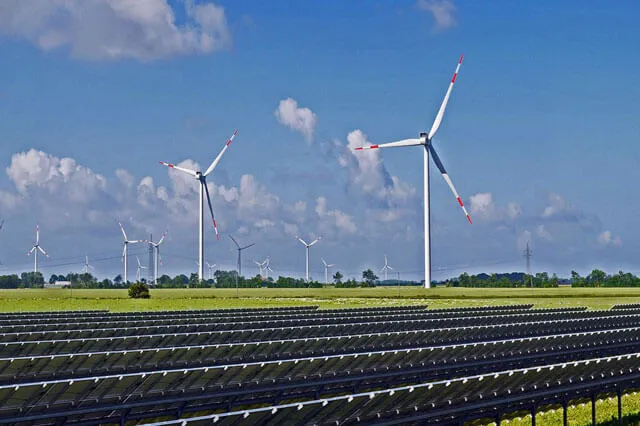
Wind turbines and rows of solar panels in a field under a blue sky

Certified to

  • ISO 9001:2015
  • IATF 16949:2016
  • UL No. E354070
  • IPC-6012B & IPC-A-600H

Technical Specifications

Quality system
ISO 9001:2015 · ISO 14001 · ISO 45001 · UL file E354070
Lead time
Fastest 1–3 days · standard 5–8 working days · expedited 2 working days
Order size
MOQ 1 pc · prototype lots 1–50 pieces · volume quoted from the data package
Scope
Bare board · component sourcing · SMT and DIP assembly · test · cable, harness and box build
Thermal and spacing
Metal-core and ceramic for power stages · thermal vias · stack-up fixed for voltage clearance
Repeat orders
Same stack-up and programme per part number, re-quoted from the original files
Confidentiality
NDA on request · factory visits by appointment
Payment
Bank transfer (T/T) · EXW Shenzhen or DDP

A solar inverter and a wind converter are the same engineering argument in different boxes: a switching stage that carries hundreds of amps sits a few millimetres from the logic that controls it, and the whole assembly has to hold its spacing through twenty years of thermal cycling outdoors. That is a stack-up and inspection problem before it is a price problem.

Where high voltage and high current meet

The power section sets the copper, the substrate and the separation; the control section sets the impedance and the layer count. Building both in one plant means the clearance agreed on the power side is not undermined by a control board designed somewhere else, and the thermal path out of the switching devices can run through the board, a metal backing or a ceramic section instead of relying on a heatsink alone.

Spacing, creepage and the stack-up

High-voltage designs live or die on the distance between conductors, and that distance is a property of the stack-up, the finish and the coating — not something added at the end. It is agreed with engineering before the layout is frozen, so a later review does not force a re-spin. The published process limits are on the capability page, because they apply to every industry and do not change by market.

Repeat production for a fielded fleet

Renewable installations are supported for decades, so the second and third batch of a board matters as much as the first. Orders are re-quoted from the original stack-up and part number with the same finish and placement programme, and a component that has gone obsolete is replaced only after the alternative is proposed in writing and approved. A replacement batch then matches the units already in the field.

Cabinets, harnesses and units

Power boards carry terminal blocks, busbars and connectors that go through the DIP lines, after which cable, harness and box build, firmware loading, functional and burn-in test and serial-number traceability run in the same plant. A controller or inverter sub-assembly can therefore leave as one tested unit.

Next step

Send the Gerber set, the voltage and thermal requirements, the BOM if assembly is included, the quantity and the target date. Board families used in this work have their own pages — heavy copper, aluminium and metal-core and ceramic — and box build covers the unit. Records and the certificate set are on quality assurance and the certifications page; controls that share a cabinet with this equipment are described under industrial control PCBs, and the rest of the industries we serve are on the industries page.

Frequently Asked Questions

  • What matters most on an inverter or converter board?

    Spacing and thermal path before copper weight. High voltage sets the clearance and creepage the stack-up has to hold, and the power stage decides how heat leaves the board — through heavy copper, thermal vias, a metal backing or a ceramic section. Both are settled with engineering before the layout is frozen.

  • Which boards does a storage system need?

    A battery system usually mixes three jobs on one set of boards: high-current bus and switching sections, a battery management board that senses next to those currents, and a control board that talks to the rest of the system. Building them in one plant keeps the sensing and power sections matched, instead of pairing a power board from one supplier with a control board from another.

  • How do repeat batches stay identical on a fielded fleet?

    The order is re-quoted from the original stack-up and files, with the same finish and placement programme, so a replacement batch matches the units already in the field. Where a component has become obsolete, the alternative is proposed in writing and approved before the order runs.

  • Can the cabinet or harness be part of the order?

    Yes. Cable, harness and box build run in the same plant as the boards, and firmware loading, functional and burn-in testing and serial-number traceability follow, so a controller or inverter sub-assembly can ship as one built and tested unit.

  • What is the delivery window?

    Fastest 1 to 3 days for a prototype, 5 to 8 working days on the standard queue, 2 working days expedited at a premium, and medium volume in 4 to 10 days. The date is confirmed on the quotation for the actual stack-up, finish and quantity.

  • Can drawings be shared before a purchase order exists?

    Yes. A mutual NDA can be signed before the Gerber set and BOM are exchanged, and a visit to the Shenzhen or Meizhou plant can be arranged around the processes the board would use. Payment is by bank transfer (T/T), with goods quoted EXW Shenzhen or DDP.

More in this section

Request a customer quote

Free engineering review and quote for PCB manufacturing, PCB assembly, component sourcing and box build.