Menu
Industries

Security System PCBs

A camera, a card reader and an alarm panel share one wall but not one set of requirements: a radio front end, an image sensor and a power over Ethernet stage have to survive in the same sealed box, unattended, for years.

  • Radio, imaging and power
  • Sealed-housing thermal
  • Unattended service life

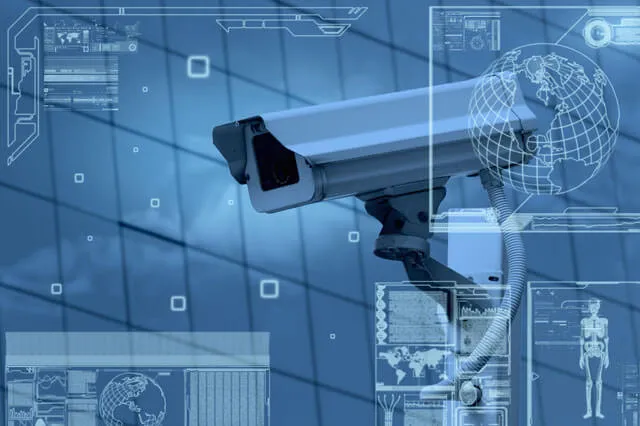
CCTV surveillance camera overlaid with network and biometric interface graphics

Certified to

  • ISO 9001:2015
  • IATF 16949:2016
  • UL No. E354070
  • IPC-6012B & IPC-A-600H

Technical Specifications

Quality system
ISO 9001:2015 · UL file E354070 · RoHS
Lead time
Fastest 1–3 days · standard 5–8 working days · expedited 2 working days
Order size
MOQ 1 pc · prototype lots 1–50 pieces · volume quoted from the data package
Scope
Bare board · component sourcing · SMT and DIP assembly · test · firmware · box build
Thermal path
Metal-core and heavy copper for IR and PoE sections · thermal vias · conformal coating
Traceability
Serial numbers recorded at box build and packing
Confidentiality
NDA on request · factory visits by appointment
Payment
Bank transfer (T/T) · EXW Shenzhen or DDP

Security hardware is a mixed-signal problem in a sealed box. An antenna, an image sensor, an infrared illuminator and a power over Ethernet front end sit within a few centimetres of each other, and the unit is expected to run unattended for years in a place nobody visits. The board set has to be designed, built and recorded as one system.

Radio, imaging and power on one board set

A wireless reader needs a defined impedance, an image sensor needs a clean analogue front end, and the PoE stage brings both heat and switching noise. When those sections are fabricated and assembled in the same plant, the stack-up, finish and shielding decisions are made together, and a fault found at functional test is traced to the board, the part or the fit without a second supplier in the loop.

Thermal management inside a sealed housing

A sealed dome has almost no convection, so heat has to leave through the board. Metal-core laminate and heavy copper planes carry heat from the IR illuminator and the PoE stage into the housing wall, thermal vias move it between layers, and conformal coating protects the surface where condensation forms. The mix follows the thermal model agreed with engineering, with the published process limits on the capability page.

Unattended service life is an inspection question

A device that nobody services has to be right the first time. Incoming material is inspected at IQC, paste deposits are checked by SPI before placement, both sides are inspected by AOI after reflow, hidden joints are X-rayed, the first article is measured against the CAD data and every board is electrically tested before it is packed. Once the unit is assembled, functional and burn-in test confirm the whole device, not just the board.

Built units, firmware and serial numbers

A camera or panel usually ships complete. Cable and harness work, firmware loading, functional and burn-in test, packing and serial-number traceability run in the same plant as the boards, so the device can leave as one built unit whose serial number maps back to the lot that produced it — and to the inspection record for that lot.

Next step

Send the Gerber set, the BOM and pick-and-place file, the quantity and the target date; a complete package is quoted within 24 to 48 hours. Board families used in security work have their own pages — high-frequency, HDI and aluminium metal-core — and box build covers the finished device. Lighting and IR heat problems are described under LED lighting PCBs, the rest of the industries we serve are on the industries page, and a quote can be requested on the contact page.

Frequently Asked Questions

  • Why build the radio, imaging and power sections in one plant?

    Because they interact. A wireless reader needs a defined impedance, an image sensor needs a clean analogue front end, and a power over Ethernet stage brings both heat and switching noise onto the same board set. When all three are fabricated and assembled in one plant, the stack-up, finish and shielding decisions are made together rather than argued between suppliers.

  • How is heat handled inside a sealed camera housing?

    Through the board rather than the air. A metal-core laminate or heavy copper planes carry heat from the IR illuminator and the PoE stage into the housing wall, thermal vias move it between layers, and conformal coating protects the surface where condensation is possible. The exact mix follows the thermal model agreed with engineering.

  • How is reliability handled when nobody services the device?

    By inspection that leaves evidence: IQC on incoming material, SPI before placement, AOI after reflow, X-ray where joints are hidden, first-article approval and 100 % electrical test, with functional and burn-in test once the unit is assembled. Because fabrication and assembly share one plant, one lot record covers the whole build for later field questions.

  • Can the finished device be delivered rather than bare boards?

    Yes. Cable and harness work, firmware loading, functional and burn-in test, packing and serial-number traceability run in the same plant, so an assembled camera or alarm panel can ship as one built unit whose serial number maps back to its lot.

  • What is the delivery window for a prototype or a production order?

    Fastest 1 to 3 days for a prototype, 5 to 8 working days on the standard queue, 2 working days expedited at a premium, and medium volume in 4 to 10 days. The date is confirmed on the quotation for the actual stack-up, finish and quantity.

  • Can files be shared before a purchase order exists?

    Yes. A mutual NDA can be signed before the Gerber set and BOM are exchanged, and a visit to the Shenzhen or Meizhou plant can be arranged around the processes the board would use. Payment is by bank transfer (T/T), with goods quoted EXW Shenzhen or DDP.

More in this section

Request a customer quote

Free engineering review and quote for PCB manufacturing, PCB assembly, component sourcing and box build.