What is actually on the board
Four kinds of contamination matter, and they do not come from the same place.
- Flux residue. From paste, wave or selective soldering. Partly designed-in (no-clean chemistry), partly process-dependent.
- Ionic contamination. Salts and activators, including flux residues and handling contamination. This is what conducts and corrodes.
- Particles. Solder balls, dust, debris from depanelling. Mechanical, not chemical: they cause shorts and mask defects.
- Process chemistry. Plating and mask residues from fabrication, washing water, and adhesive from coverlay or stiffeners on flex builds.
A cleaning process that does not target the right one simply moves it around.
Three routes
No-clean. The paste and profile are chosen so the residue is benign, and no washing step follows. It is the fastest and cheapest route, and it is adequate for most digital boards in a dry environment. It is not adequate under coating or on high-impedance analogue circuits.
Water-wash. Water-soluble paste and a multi-stage washer: wash, rinse, rinse with deionised water, dry. Effective on ionic residue and on fine-pitch packages where flux is trapped under the part. It requires components that tolerate water — not every relay, buzzer, sensor or label does — and a drying step that is verified, not timed by habit.
Solvent or semi-aqueous. For assemblies that cannot take water, or for specific residues. It brings ventilation, waste handling and material compatibility into the decision.
What the cleaning can break
Cleaning is more aggressive than it looks. Three failure modes are common:
- Trapped moisture. Water left under a BGA or inside a connector corrodes quietly and fails later. Drying is part of the process, not an afterthought.
- Component damage. Ultrasonic cleaning is effective in blind areas, but cavitation can damage wire bonds and separate component end caps; where it is used, frequency and power are selected for the parts, and delicate assemblies stay out of the tank.
- Marking and labels. Harsh solvents remove legend and adhesive labels, which is a documentation failure rather than an electrical one.
Proving it is clean
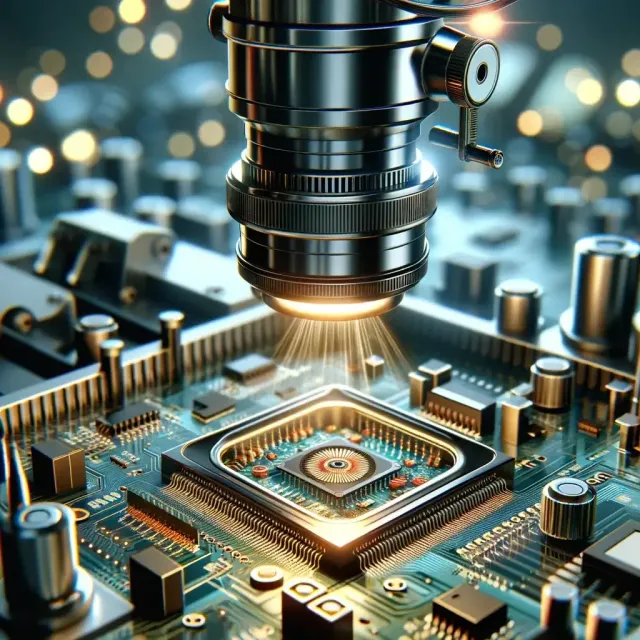
Cleanliness is a measurement, not an impression. The ionic contamination test converts rinse conductivity into an equivalent of sodium chloride per unit area, and the result goes with the lot record. Where the design is sensitive, surface insulation resistance testing follows, and visual inspection under magnification catches the particles the ionic test cannot see.
The test method is described in the ionic contamination note; where the board is coated afterwards, the coating decision is covered in the coating vs potting comparison.