Two processes, one purpose
Conformal coating and potting both protect a circuit from its environment. They solve it at different scales.
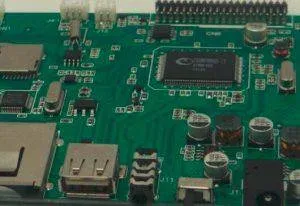
Coating is a thin film — typically 25–75 µm — applied over the assembled board: acrylic, polyurethane, silicone or parylene, by spray, dip or selective dispense. It follows the topography of the board, leaves connectors and test points masked, and adds almost no weight.
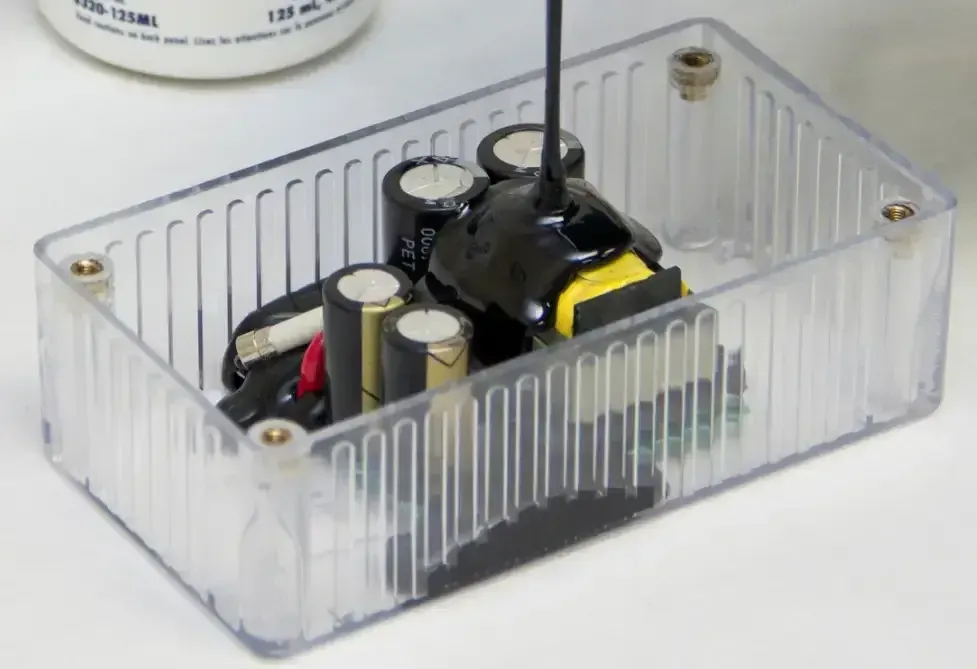
Potting fills the volume. The assembly sits in a housing that is filled with epoxy, polyurethane or silicone and left to cure, so the components are embedded rather than covered.
What each one protects against
| Threat | Coating | Potting |
|---|---|---|
| Humidity and condensation | Yes | Yes |
| Splash and occasional water | Yes | Yes |
| Prolonged immersion | No | Yes |
| Salt spray and corrosive gas | Partial | Yes |
| Mechanical shock and abrasion | No | Yes |
| Tamper and reverse engineering | No | Yes |
The table explains why the two are rarely interchangeable: coating is a barrier against the environment reaching the surface; potting is a barrier against the environment reaching anything.
Rework, weight and heat
Three consequences follow from the thickness difference.
- Serviceability. Coating is designed to be removed and reapplied; potting is not. If a product will be repaired in the field, coating keeps that option open.
- Weight and volume. A potted assembly is heavier and needs a housing that can hold the compound. On wearables and handheld devices, coating is often the only option that fits.
- Thermal path. Coating is thin enough to be almost thermally neutral. Potting changes where heat goes: it can spread heat into the housing, or trap it if the compound is an insulator and there is no metal nearby.
Process control decides the result
Both processes fail for the same reasons: contamination, moisture and air.
The board has to be clean and dry before either one. Flux residue under a coating becomes a trapped ionic path; moisture in the laminate or in the components turns to steam during cure and leaves voids. Potting adds a mixing step: ratio, degassing and cure time decide whether the compound cures fully, and bubbles that form around components are stress concentrators rather than cosmetic defects.
Masking is the other shared discipline: connectors, test points, pressure sensors, relays and antenna areas are kept clear, and the mask is agreed on the drawing rather than decided at the bench.
Choosing
Ask three questions. Does the environment include immersion, salt or abrasion? Will the product be repaired? Is there a thermal path that potting would block?
Two "no" answers and a thin product point to coating. Immersion, corrosion or tamper resistance point to potting, with the thermal and service implications accepted up front. Where the requirement is humidity alone, coating is almost always enough — and it keeps the assembly testable.
Both processes run after assembly in the same plant; the assembly limits are on the PCBA manufacturing page, and cleanliness requirements are covered in the cleaning note.