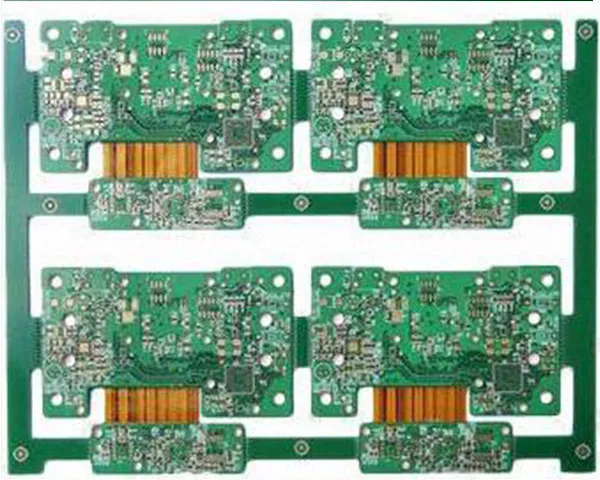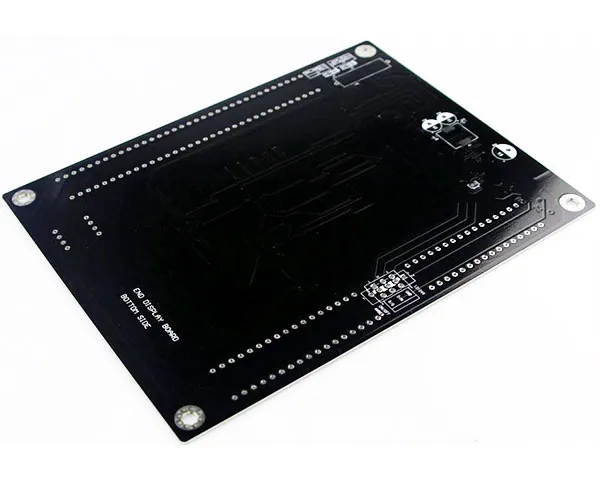
A prototype order is decided by the calendar rather than by the board. The DFM review, the panelisation and the traveler are the same whether the quantity is five pieces or five hundred; what changes is where the panel sits in the queue and how much of the process is run in parallel.
What the quick-turn service covers
- Bare boards from 1 to 38 layers — 0.075 mm line and space, 0.15 mm mechanical or 0.1 mm laser-drilled holes, 0.5–20 oz copper and panels up to 580 × 1900 mm.
- Stencils within four hours — cut and delivered so paste printing does not wait on a second supplier.
- Prototype and small-volume assembly — four SMT lines at six million chips per day and three DIP lines at 1.6 million pieces per day, for orders that have to come back populated.
- Engineering review — DFM, DFA and DFT before the quotation is fixed, so a stack-up or clearance problem is found while it is still a file rather than a panel.
Where the days actually go
Most of the elapsed time on a prototype is not drilling. It is the DFM question that comes back two days after the files were sent, the stack-up that has to change to hit the impedance, the finish that has to be ordered in. Sending a complete package at the start — Gerber, stack-up, impedance targets, finish, quantity and the target date — is the single largest saving available, and it costs nothing.
From prototype to production
The prototype and the medium-volume order are built on the same lines with the same published limits, so a design that passes at prototype quantity does not have to be re-qualified for production. Panelisation is drawn once and reused, the same surface finish carries across to the larger order, and the assembly programme written for the prototype is the one that runs in volume — so the finished unit ships as an assembled product rather than as a board plus loose parts.
Price list and lead times
The published list below is the starting point for a standard FR-4 prototype, priced for panels up to 150 sq.inch (under 0.1 m²) at each layer count:
| Layers | Price (up to 150 sq.inch) | Fastest lead time | Standard lead time |
|---|---|---|---|
| 2 | 60 USD | 24 hours | 5 working days |
| 4 | 120 USD | 48 hours | 6 working days |
| 6 | 200 USD | 72 hours | 7 working days |
| 8 | 300 USD | 96 hours | 8 working days |
| 10 | 400 USD | 120 hours | 10 working days |
| Above 12 | Case by case | Case by case | Case by case |
Small to middle volume runs on the same lines, with the queue set by the panel area:
| Layers | Standard lead time (2–100 m²) |
|---|---|
| 2 | 12 working days |
| 4 | 14 working days |
| 6 | 16 working days |
| 8 | 18 working days |
| 10 | 20 working days |
| Above 12 | Case by case |
Both tables are examples, and the figures are confirmed on the formal quotation for the actual stack-up, surface finish, copper weight and quantity. Sample and prototype orders can be quoted as a package; volume orders are priced from the data package once the Gerber set, BOM and quantity are fixed. The fastest slot depends on the queue when the complete data package arrives, and runs to three days at 2–6 layers; at 8 and 10 layers the same slot is four to five days, with a 2-working-day expedited window at a premium.
Getting a quotation
Send the Gerber set with the layer count, board thickness, copper weight, surface finish and quantity, plus the BOM and pick-and-place file where assembly is wanted. The process limits used for the quotation are listed on the capability page, and enquiries are answered in the order they arrive, with the delivery date confirmed with the price.
Prototype quantities can continue straight into assembly; the China PCB assembly page covers express builds, sourcing and box build in the same plant.