
Menu
Blog

SMD Components in SMT Assembly

Placement is only as good as the feeder setup. Most SMD issues trace back to the stencil, the feeder or the paste.

Hitech Circuits Engineering Desk

Shenzhen, China · PCB fabrication and assembly

2 min read

Published:

Last updated:

Technical review: Process figures checked against our published capability sheet. View capability sheet

SMD Components in SMT Assembly

Feeding

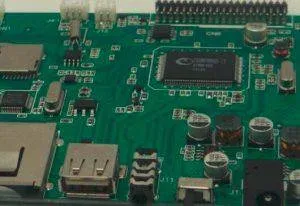
Tape-and-reel for volume, trays for fine-pitch ICs, sticks rarely. Feeder calibration and part verification decide whether the right component lands in the right place.

Placement and reflow

The machine places on printed pads; the profile then forms the joint. Small passives are the most sensitive to paste volume and thermal imbalance.

Verification

AOI checks presence, offset and fillet; X-ray is reserved for hidden joints. A first-article inspection confirms the setup before the run continues.

Technical Specifications

Passive range
01005 to 1210
Capacity
6,000,000 chips per day across four SMT lines
Acceptance
IPC-A-610 workmanship

Frequently Asked Questions

  • What causes tombstones on small passives?

    Uneven heating across the two pads, usually from asymmetric paste or a pad geometry that lets one end wet first. Balanced apertures, correct paste volume and a profile that heats both ends evenly prevent it.

  • Can 01005 parts be reworked by hand?

    Technically yes, practically no at volume. They need a microscope, a fine tip and a steady hand; for most products it is cheaper to re-run the assembly than to rework an 01005 by hand.

← Blog

Related engineering notes

Request a customer quote

Free engineering review and quote for PCB manufacturing, PCB assembly, component sourcing and box build.