Three models, one question
The question that separates them is simple: who buys the parts, and who answers when something is wrong?
Everything else — capability, equipment, certificates — matters, but it does not change the answer to that question, and the answer is what decides how much of the project a buyer is actually managing.
Model one: board house only
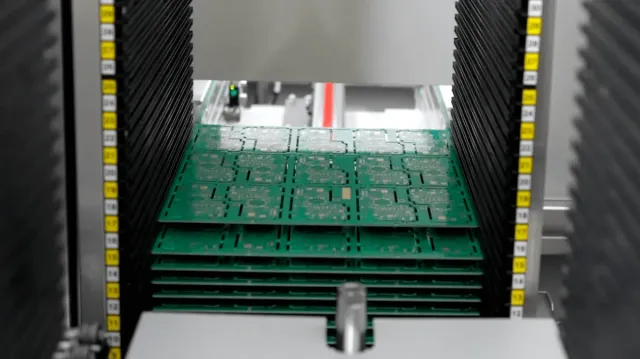
The supplier fabricates the bare board to IPC-6012B / IPC-A-600H acceptance and performs electrical test. It does not see the BOM, does not know what will be placed, and is not responsible for whether the finished assembly works.
This is the right model when the customer already has an assembly partner, or when the board is a commodity build. The interface is a Gerber set, a stack-up drawing and a drill file.
Model two: assembly house only
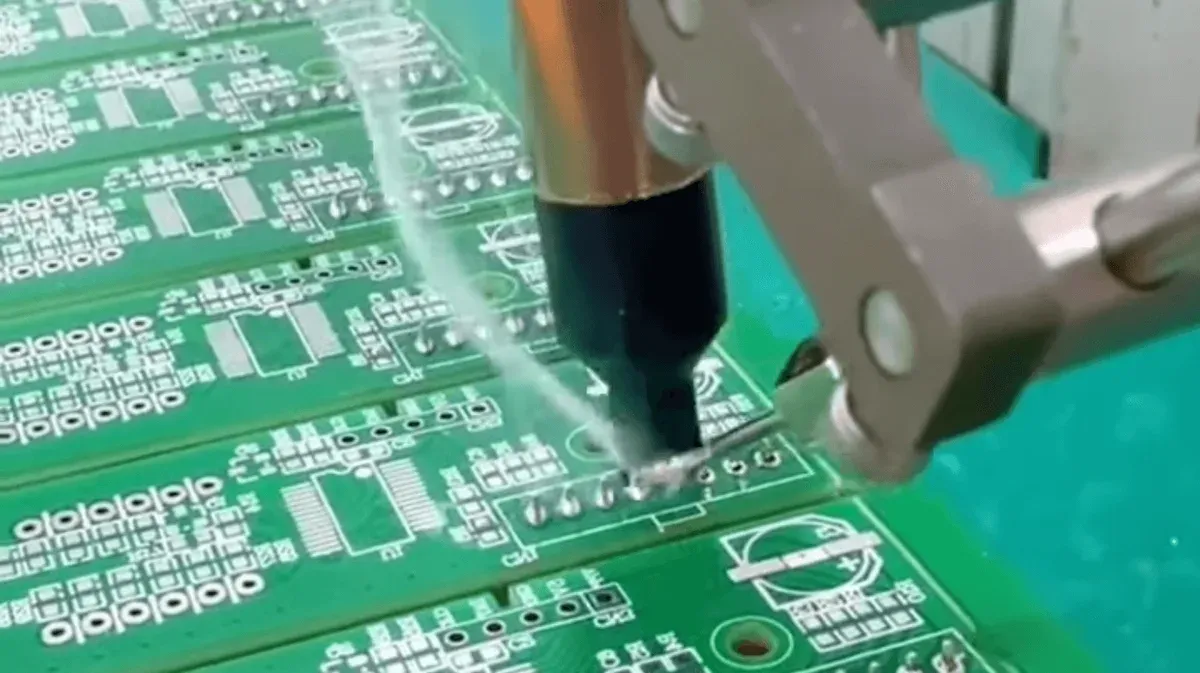
The assembly house receives bare boards, buys or receives components, prints, places, reflows, tests and returns the assembled unit. It is responsible for everything after the bare board — and for incoming inspection of boards it did not make.
That last point is the hidden one: the assembly house has to reject or accept boards it has no history with. A registration error or a finish problem becomes a conversation between two suppliers while the customer's schedule runs.
Model three: turnkey, one site
Fabrication, sourcing and assembly under one roof. One quotation, one schedule, one owner of the outcome. The trade-off is concentration: if the site stops, everything stops — which is what the second source is for.
The advantage is not only convenience. When the same team controls the finish and the assembly, a finish that causes solderability problems is caught before the boards are assembled, and a design rule that suits the fabricator is not negotiated at the assembly house.
What the handoff costs
- Shipping and handling. Panels packed and unpacked twice, with the damage risk that goes with it.
- Incoming inspection. Re-checking dimensions, finish and registration at the second site.
- Schedule coupling. Two lead times in series, plus transport, plus customs if the sites are in different countries.
- Dispute resolution. A defect found after assembly has two possible owners. Proving which one is expensive for everybody.
How to choose
| Situation | Model that usually fits |
|---|---|
| Assembly partner already qualified, board is simple | Board house only |
| Board sourced on price, assembly is the core competence | Assembly house only |
| Prototype to volume on one part number | Turnkey |
| Automotive or medical traceability | Turnkey, one quality system |
| Export-control or split-supplier policy | Two suppliers, with a written interface |
The interface document matters more than the model. It should state who buys which line items, who accepts incoming boards, what happens when a defect is found after assembly, and which acceptance standard governs each stage.
The process limits for both halves are on the capability page, the assembly order models on the PCBA manufacturing page, and the question of outsourcing at all in the outsourcing note.