Menu
Blog

HASL, ENIG or OSP: Choosing a Surface Finish

The finish is a process decision with yield consequences. Four questions narrow it down before a quotation is issued.

Hitech Circuits Engineering Desk

Shenzhen, China · PCB fabrication and assembly

2 min read

Published:

Last updated:

Technical review: Process figures checked against our published capability sheet. View capability sheet

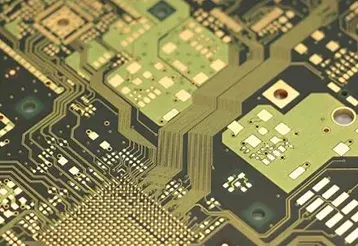
How to select the surface treatment process of HASL, ENIG and OSP for printed circuit boards?

Four questions

  1. What is the finest pitch? Below about 0.5 mm, flatness matters and ENIG pulls ahead.
  2. How many reflow cycles? Double-sided assembly and rework favour ENIG over OSP.
  3. How long is the shelf life? OSP and immersion silver age; ENIG and HASL keep far longer.
  4. What does the product do? High-frequency and low-loss designs may need a specific finish to avoid loss in the pad area.

What each finish costs you elsewhere

  • HASL — cheapest, tolerates rework, but uneven at fine pitch.
  • ENIG — flat and durable, higher cost, and the nickel layer must be controlled to avoid brittle joints.
  • OSP — cheapest flat option, single reflow, short shelf life.
  • Immersion silver — good solderability, sensitive to handling and tarnish.

Our default

For mixed SMT and through-hole work we quote ENIG unless the design clearly favours another finish. If the assembly plan is unusual — selective solder, press-fit, wire bonding — say so when requesting the quote, because it changes the recommendation.

Technical Specifications

Finishes
HASL · lead-free HASL · ENIG · immersion silver · OSP
Minimum trace / spacing
0.075 mm / 0.075 mm
Acceptance
IPC-6012B / IPC-A-600H

Frequently Asked Questions

  • Which finish suits a board with 0.4 mm pitch BGAs?

    ENIG is the usual choice: the surface is flat, so paste deposits and placement stay consistent, and the nickel barrier protects the pads through multiple reflow passes. HASL is difficult to control at that pitch, and OSP is only suitable if the board is assembled once and soon.

  • When is OSP the right answer?

    When the board is assembled in a single reflow shortly after fabrication, needs no long storage and cost dominates. OSP is the cheapest finish and gives a flat copper surface, but it is consumed by the first soldering operation and offers no protection afterwards.

← Blog

Related engineering notes

Request a customer quote

Free engineering review and quote for PCB manufacturing, PCB assembly, component sourcing and box build.